How Bungie's Marathon Trilogy Shaped Halo and Destiny's Sci-Fi Legacy
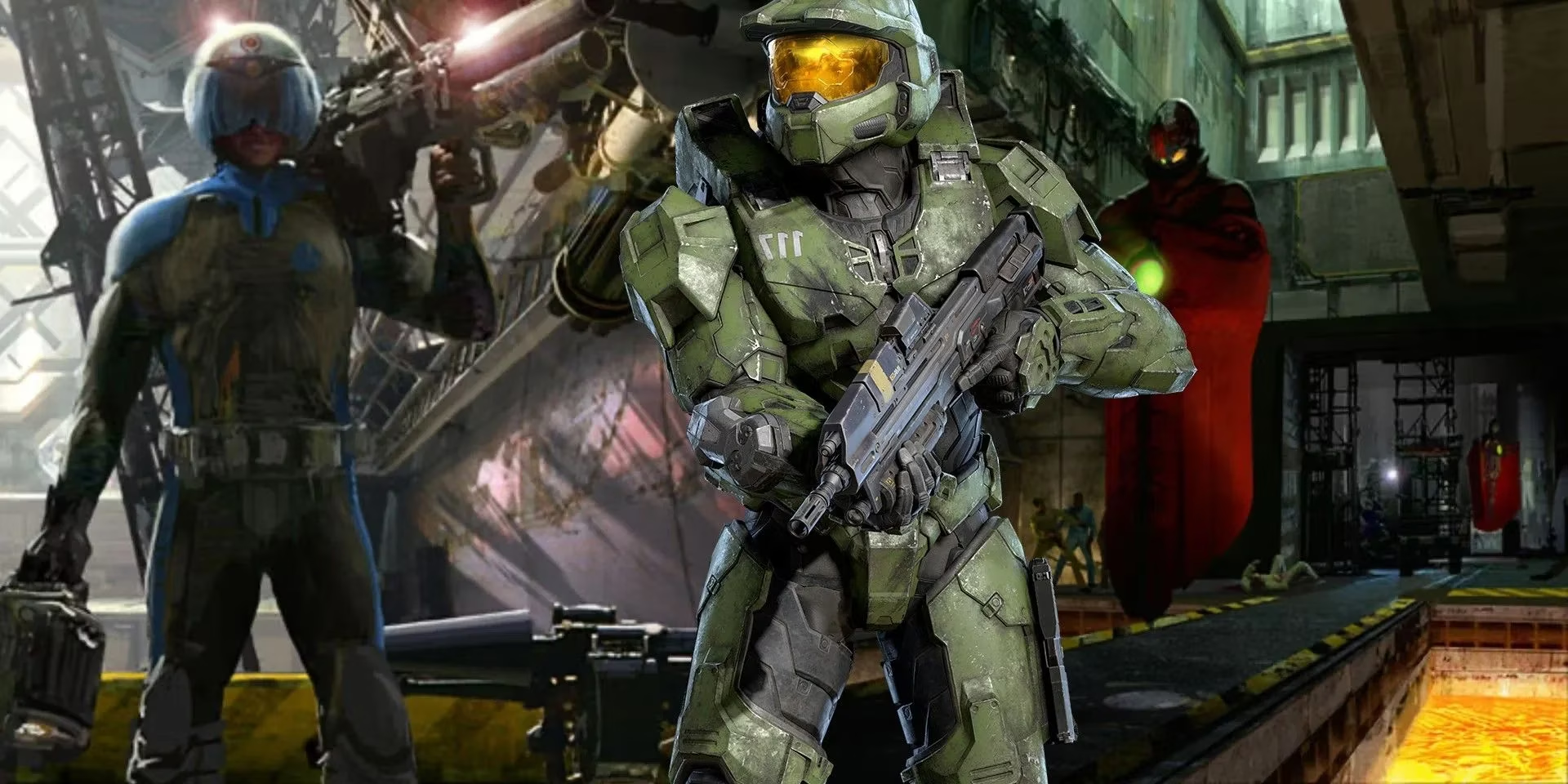
In 2026, Bungie's reputation as a first-person shooter powerhouse remains inseparable from two franchises: Halo and Destiny. Yet the creative DNA for both was forged earlier, in the 1990s, when the studio was a leading developer for Macintosh computers. The Marathon trilogy—Marathon, Marathon 2: Durandal, and Marathon: Infinity—introduced the literary science fiction, uneasy artificial intelligences, and kinetic gunplay that would later define Master Chief's saga and the Guardians of Destiny. As Bungie's long-awaited Marathon revival remains in development, the original trilogy's influence is more visible than ever.
From Macintosh Cult Classic to Sci-Fi Blueprint
Before Microsoft acquired Bungie, the studio built its reputation with creative Macintosh titles such as the survival RPG Pathways Into Darkness, the Myth duology of real-time tactical fantasy games, and the 1990s Doom-style shooters of the Marathon trilogy. The first Marathon game, published in 1994, took place aboard a slower-than-light colony ship orbiting Tau Ceti. Players controlled a Security Officer who fought the shock troopers of a slave-taking alien empire and the schemes of onboard AIs afflicted by a synthetic megalomania called Rampancy.
In Marathon 2: Durandal, the player character is kidnapped by one of the colony ship's half-insane AIs and dragged across the galaxy on a quest to liberate an alien species from cybernetic shackles. Marathon: Infinity, the final game, pushed the plot into truly apocalyptic and mind-bending territory. Its literary depth became a wellspring of inspiration for Bungie's later gameplay and story reveals in Halo and Destiny.
Halo's Debt to Marathon
Unlike the Master Chief of Halo: Combat Evolved, it is unclear whether the Security Officer of the Marathon trilogy is one of the Mjolnir Mark IV Battle Cyborgs alluded to in certain in-game computer terminals. Within the Marathon games, however, the player character can punch armored alien troopers to death, survive falls that would kill normal humans, and is protected by a suit-projected force field. These traits clearly anticipate the Master Chief's super-soldier fantasy.
Staple weapons of the Halo games—dual-wielded pistols, double-barreled rocket launchers, and energy pistols that shoot charged bolts of plasma—appeared first in the Marathon games. Intriguingly, the Covenant enemies of Halo, a conquering empire composed of different alien beings, seem to have been inspired by the multi-species enemy forces of the Pfhor Empire from Marathon. Both franchises even feature a plot twist where an alien species defects from their empire to fight alongside humanity.
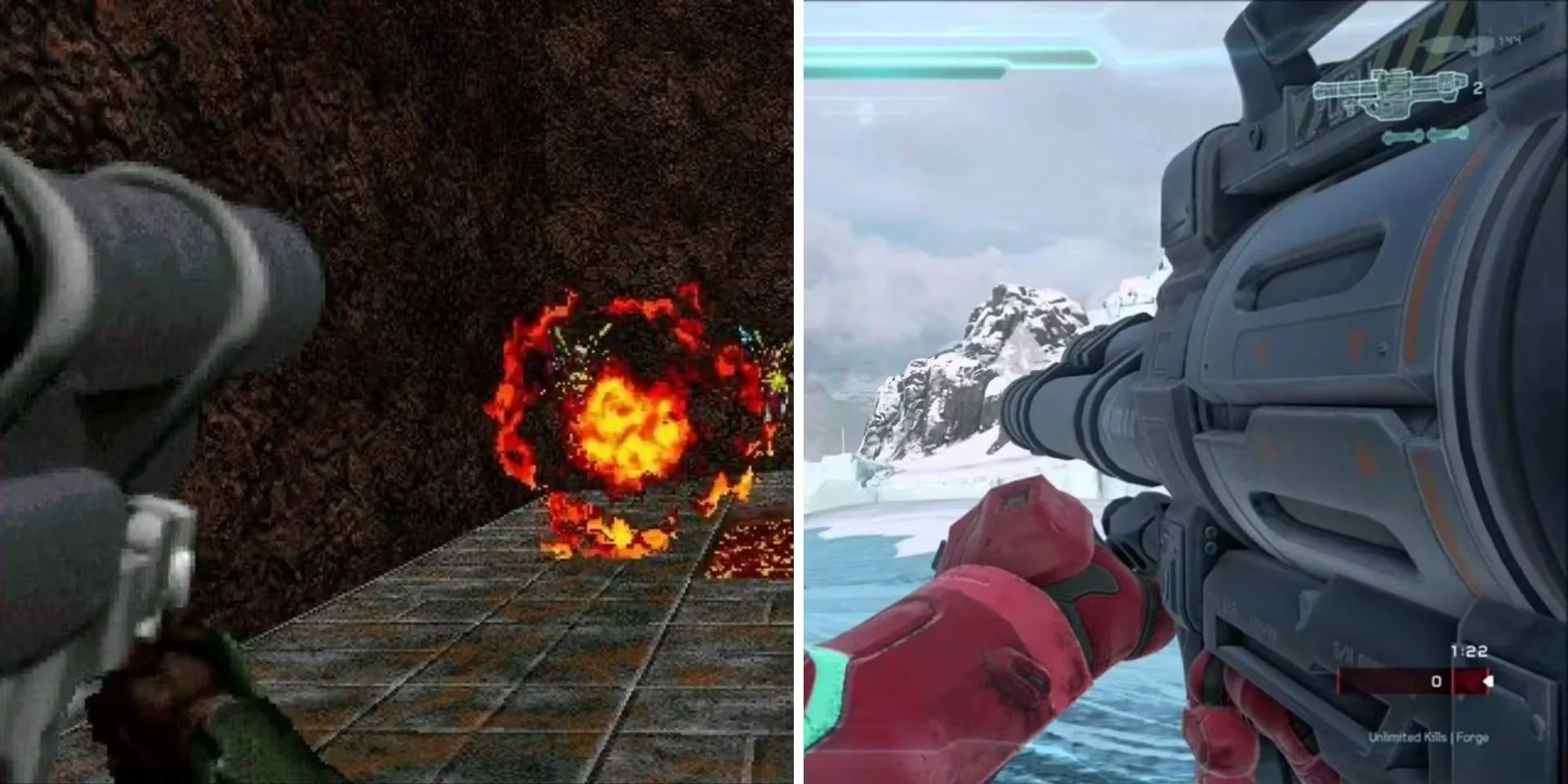
| Marathon Element | Halo Echo | Destiny Echo |
|---|---|---|
| Security Officer with force field | Master Chief's Mjolnir armor | Guardian resurrection and Light |
| Pfhor Empire multi-species | Covenant alliance | Cabal, Fallen, Hive factions |
| Rampant AIs like Durandal | Cortana | Ghosts, Warminds, Rasputin |
| Terminal-based lore | Hidden terminals, Cortana dialogue | Lore books, grimoire cards |
| Dual pistols, rocket launchers, plasma | Halo sandbox | Destiny exotic weapons |
Destiny's Surreal World-Building and Metaphysics
On the surface, the storyline of Bungie's Destiny games seems to be a classic tale of good versus evil, with Guardians wielding light-themed powers fighting to protect humanity against alien and cosmic threats collectively known as the Darkness. Players who dig deeper into Destiny's various lore books, however, discover a much more complicated and philosophically intricate setting. It includes hive insects who worship the logic of swords, god-emperors who defy death with decadence, and paracausal reality-warping phenomena.
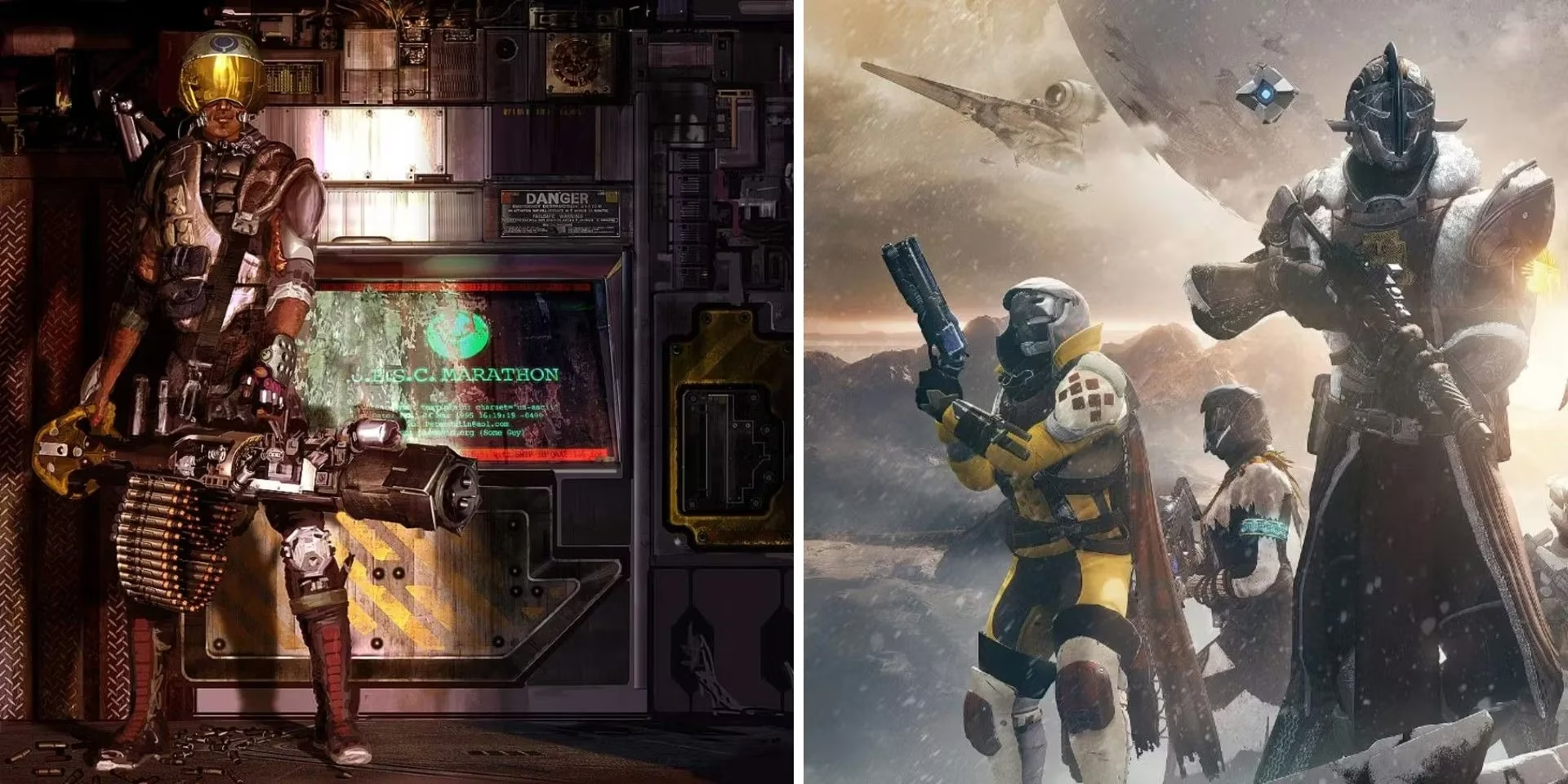
These more surreal parts of Destiny's backstory owe a great deal to the narrative of the Marathon games, which was delivered through text in computer terminals. Between mission objectives and taunts from unstable AIs—who have the megalomania of SHODAN, the sarcasm of GLaDOS, and are sometimes named after mythical swords like Cortana from Halo—players can discover garbled computer code, stream-of-consciousness poetry, and musings about heroism, fate, and the end of the universe itself.
Why the Marathon Legacy Still Matters in 2026
In 2026, Bungie operates under Sony Interactive Entertainment, and Destiny 2 continues to evolve. The studio's upcoming Marathon revival, a player-versus-player extraction shooter, returns to the same universe that first established Bungie's fascination with AI madness, alien empires, and fragmented storytelling. Even as the industry shifts toward live-service games and cross-platform ecosystems, the original Marathon trilogy remains a foundational text for console and PC shooters.
Key takeaways include:
-
🎮 Marathon pioneered regenerating health, fine-tuned thumb-stick controls, and vehicular combat before Halo perfected them.
-
🤖 Rampant AIs like Durandal paved the way for Cortana, Ghosts, and other ambiguous digital characters.
-
📖 Terminal-based lore became the model for Destiny's grimoire cards and in-game lore books.
-
👽 The Pfhor Empire's multi-species threat directly foreshadowed the Covenant and the Darkness.
-
🔫 Dual pistols, rocket launchers, and plasma weapons first appeared in Bungie's Macintosh-era shooters.
For longtime fans and new players alike, the Marathon trilogy is not merely a historical curiosity. It is the secret origin of Bungie's most celebrated worlds, and its influence continues to echo through every Master Chief mission and every Guardian raid in 2026.
Discussion