Destiny 2 Frontiers: Bungie Unveils Major Overhaul for Year 11 with Apollo and Behemoth Expansions
As Destiny 2 approaches a pivotal moment in its long-running saga, Bungie has charted a bold new course for the game's eleventh year. The upcoming era, titled Frontiers, promises to be the most transformative yet, split into two major expansions: Codename: Apollo and Codename: Behemoth. This announcement comes at a time when the live-service landscape is more competitive than ever. With a renewed focus on accessibility, player experience, and narrative innovation, Bungie aims to ensure that Destiny 2 remains a cornerstone of the genre for years to come. But can these sweeping changes revitalize the veteran title and attract a new generation of Guardians?
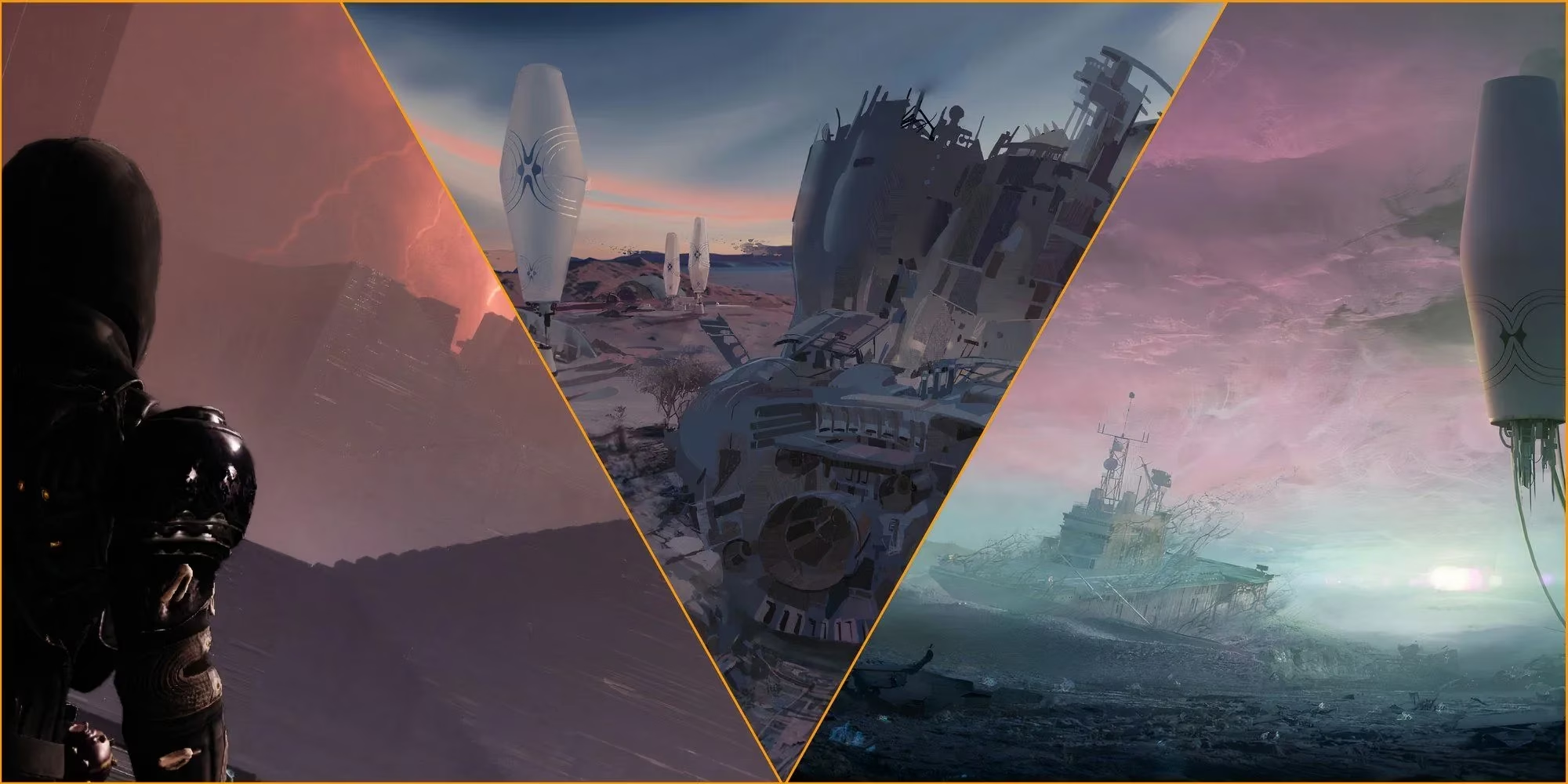
🚀 A New Model for a New Era
One of the most significant shifts is in the game's content delivery and financial model. Year 11 will introduce a rhythm of two expansions per year, complemented by four major free-to-play content updates. This raises a critical question: Is Destiny 2 finally becoming a fully free-to-play game? The answer is nuanced. While Bungie is dramatically ramping up the amount of free content available, the traditional Annual Pass model for premium seasons will persist. The goal is clear: lower the barrier to entry that has scared away potential players while maintaining a sustainable revenue stream for ongoing development. This hybrid approach seeks to increase the active player population and ensure the game's longevity. Transparency is also a key pillar; developers have pledged to share more information about upcoming content as it's being worked on, reducing speculation and building trust with the community.
🔧 Revolutionizing the Core Experience: UI and Activities
For years, players have navigated an increasingly crowded Director screen. The Portal System, a cornerstone of the Frontiers update, aims to solve this by completely overhauling the game's user interface. This system will replace the traditional Destinations tab, streamlining access to all of Destiny 2's core activities. But the changes go far deeper than a simple menu reshuffle.
A new Challenge System is set to replace the old Modification Rotation for playlist activities. This system allows players to customize their PvE experiences by applying challenging modifiers for greater rewards. It's designed to reward mastery and skill, offering a fresh endgame pursuit for veterans familiar with Grandmaster-level content. Crucially, this system will prioritize PvE activities. The developers have acknowledged that integrating PvP (Crucible) into this framework presents unique challenges, as player-versus-player combat isn't naturally suited to such modifiers, indicating that a separate solution for competitive play is still in the works.
| Old System | New Frontiers System | Player Benefit |
|---|---|---|
| Destinations Tab | Portal System | Streamlined, intuitive access to all activities |
| Modification Rotation | Challenge System | Customizable difficulty & rewards for skilled players |
| Fixed Reward Tiers | Refreshed Activity-Specific Pools | More targeted loot acquisition |
⚔️ The Loot Revolution: Gear 2.0
Perhaps the most exciting change for collectors and min-maxers is the complete overhaul of Legendary gear. While no existing weapons will be "sunset" or made obsolete, a new quality layer will be added. Imagine Adept weapons, but applied across the entire loot spectrum. Base Legendary drops will resemble current items, but higher-tier versions will offer superior stats, perks, and unique visual effects for easy identification.
This evolution doesn't eliminate the weapon crafting system; instead, it reimagines it as a tool for players to "catch up" on weapons they missed. Deepsight weapons may see changes to facilitate this. Furthermore, reward pools will be completely restructured:
-
Core PvE (Strikes): Dedicated weapon and armor sets.
-
Core PvP (Crucible): Dedicated weapon and armor sets.
-
Pinnacle PvE (Raids, Dungeons): Dedicated weapon and armor sets.
-
Pinnacle PvP (Trials of Osiris): Dedicated weapon and armor sets.
Each Major Update will refresh these pools, ensuring a steady stream of new loot to chase and reducing the repetitive grind that has plagued past seasons.
📖 A Saga Unchained: Non-Linear Storytelling
Narrative delivery is getting a massive shake-up. The year-spanning saga beginning with Codename: Apollo will abandon the traditional "breadcrumbing" method of weekly story unlocks. Players will experience a non-linear storyline, free to explore different story beats at their own pace without artificial time gates. This represents a fundamental shift in how Destiny tells its stories, granting players unprecedented agency. While the exact format may vary between expansions, the removal of the weekly progression lock is a permanent change welcomed by fans who desire more flexible engagement with the game's lore.
🗓️ A Steady Stream of Content
Addressing the classic "content drought" cycle, Bungie is moving to a more consistent release schedule. Instead of three Episodes, Year 11 will feature four Major Updates—one per trimester. Each expansion will launch alongside a Major Update, with a second following three months later to refresh the meta and introduce new rewards. This model aims to stabilize the player population, avoiding the high peaks and steep valleys associated with longer, less frequent content drops. It's a strategy clearly inspired by the consistent delivery of competitors like Warframe. Alongside this new rhythm, developers have teased the return of a fan-favorite exotic: the Icebreaker sniper rifle, sparking excitement and speculation within the community.
🌌 The Final Frontier: A Narrative Preview
All these systemic changes are in service of a grand new narrative direction. Frontiers is more than a title; it's a promise. Past expansions like The Witch Queen and Lightfall hinted at a future beyond our solar system, and recent in-game dialogue between Saint-14 and Osiris has explicitly discussed the dream of exploring beyond Earth. The narrative of Episode: Echoes, focused on ushering in a new Golden Age of space exploration, sets the stage perfectly.
Could the outcome of the current conflict with the Conductor, Maya Sundaresh, lead to a rebooted and upgraded Failsafe—the beloved AI from the Exodus Black—guiding humanity into the cosmos? With the loss of Rasputin, the universe needs a new guiding intelligence. Bungie has expressed a strong desire to "try new things" and experiment with storytelling and rewards. Will they have the courage to truly let players abandon the familiar confines of the Sol System and venture into the unknown? Only time will tell, but the stage is set for Destiny 2's greatest adventure yet.
In conclusion, Destiny 2: Frontiers represents a comprehensive and ambitious reinvention. From its business model and user interface to its loot systems and story delivery, Bungie is addressing long-standing player feedback. The success of this endeavor hinges on execution. If the developers can deliver on these promises, Year 11 could mark the beginning of Destiny 2's most vibrant and sustainable chapter, finally allowing Guardians to chart their own course among the stars.
Discussion