Bungie's Legal War With AimJunkies Takes a Wild Turn
Bungie has spent years waging a relentless campaign against cheat makers, and for a while, it seemed like the studio was winning. It had already sued multiple cheat distributors, even securing a massive $13.5 million judgment in one case. But when it turned its sights on AimJunkies, the tables unexpectedly flipped. What started as a straightforward lawsuit against a cheat seller has spiraled into a bizarre countersuit that accuses the Destiny 2 developer of hacking, DMCA violations, and underhanded tactics. As of 2026, the legal battle continues to simmer, and it has become one of the strangest stories in gaming law.
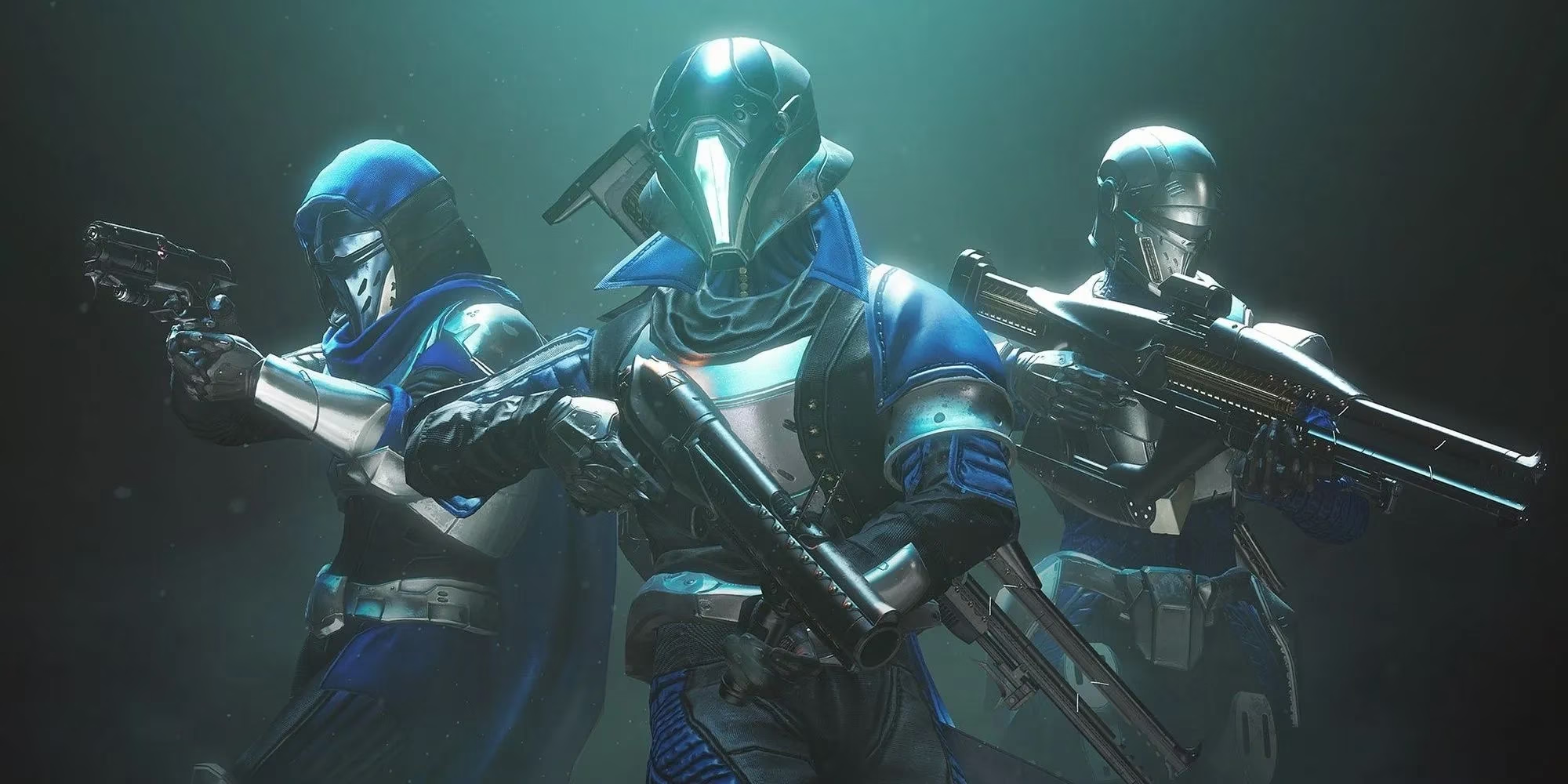
The saga began when Bungie filed suit against AimJunkies, alleging that the site sold cheats for Destiny 2. The initial case was dismissed by the court—a significant blow to Bungie. But the developer didn't back down. It revised its complaint, and this time, the court sided with Bungie, allowing the lawsuit to proceed. Phoenix Digital, the company behind AimJunkies, had tried to get the revised suit dismissed as well, but the judge refused. That should have been a moment of triumph for Bungie. Instead, it marked the beginning of a fierce counterattack.
AimJunkies, through its owner Mr. May, fired back with a countersuit that reads like a cyber-thriller. According to the filing, Bungie allegedly accessed files on Mr. May's personal computer without his knowledge or consent. The countersuit points to a Limited Software License Agreement (LSLA) from 2019, arguing that it does not grant Bungie the authority to "surreptitiously access files" or download information. The newer LSLA, the suit acknowledges, does allow anti-cheat access—but that version wasn't in effect at the time. In other words, AimJunkies claims Bungie went on a digital fishing expedition.
The allegations don't stop there. The countersuit also accuses Bungie of willingly accessing information about Phoenix Digital employees with the intent to defraud. Furthermore, Mr. May argues that this conduct violates the DMCA's anti-circumvention provision. It's a serious charge, one that could expose Bungie to liability if proven. But the most intriguing detail involves a mysterious figure named "Martin Zeniu." According to AimJunkies, Zeniu acquired Destiny 2 cheats from the site. The cheat seller claims that Zeniu was actually an agent or employee of Bungie, who then reverse-engineered the software to help Bungie build its case. If true, it would mean Bungie used deceptive means to gather evidence—a violation of Phoenix Digital's Terms of Service.
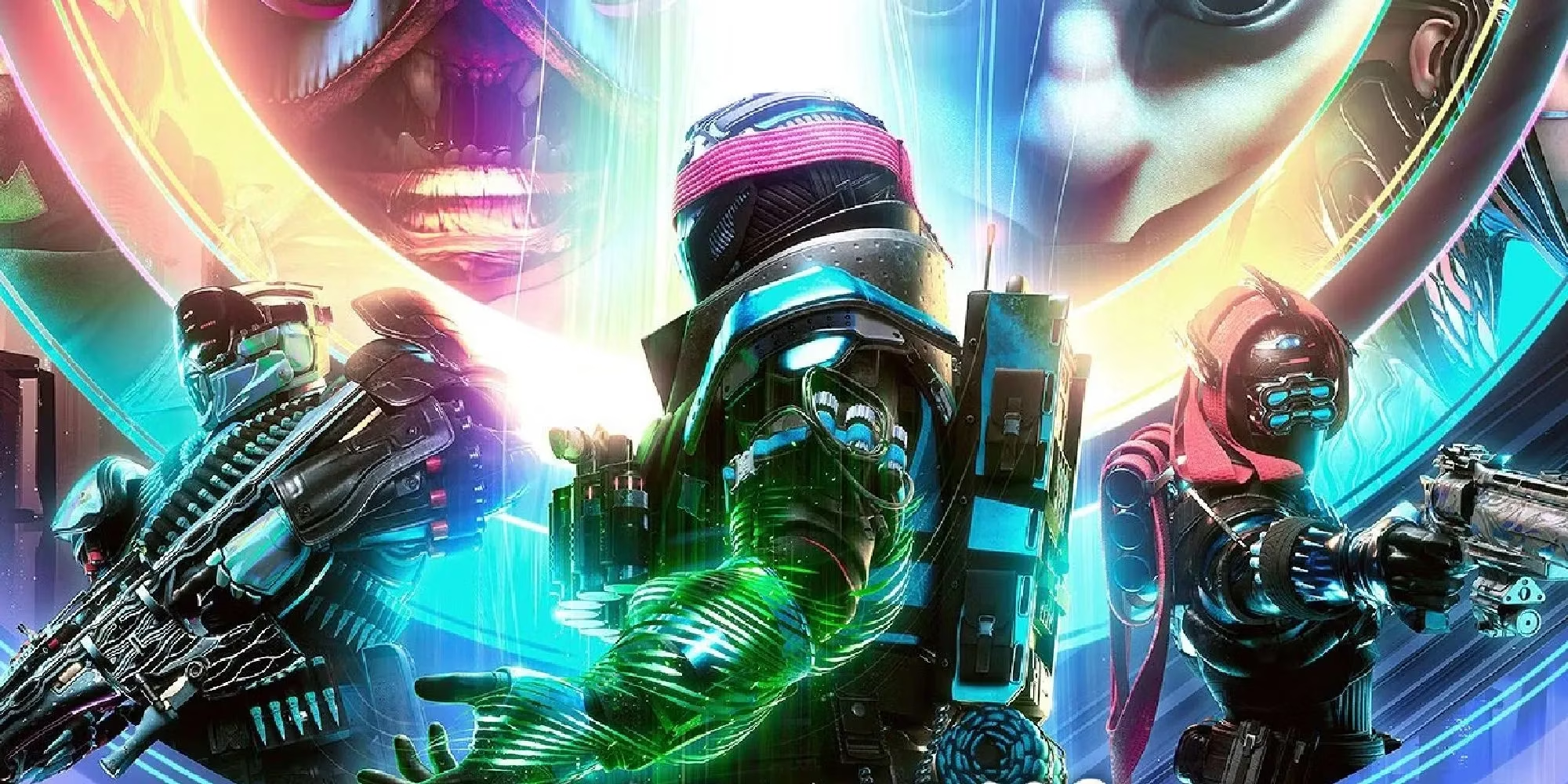
AimJunkies is now seeking damages and an end to all unauthorized computer access by Bungie. The countersuit has turned the spotlight back on the developer, raising uncomfortable questions about how far it is willing to go in its war on cheats. Bungie, for its part, has publicly stated that these lawsuits are "good for business," arguing that they protect the integrity of its games. But this particular case is different. It's not just about shutting down a cheat seller; it's about whether Bungie itself crossed legal and ethical lines.
Here's a quick breakdown of the key claims and counterclaims:
| Party | Claim |
|---|---|
| Bungie | AimJunkies sold cheats for Destiny 2, violating copyright and terms of service. |
| AimJunkies | Bungie hacked Mr. May's computer, violated DMCA, and used a deceptive agent to obtain cheats. |
| Bungie | The lawsuits deter cheating and protect legitimate players. |
| AimJunkies | Bungie's actions were unauthorized and constitute an abuse of power. |
The legal back-and-forth has been messy. Bungie's original suit was dismissed, then revived. Phoenix Digital tried to kill the revised suit, but the court refused. Now AimJunkies is on the offensive, and it looks firm in its stance. The cheat maker's countersuit paints Bungie as a corporate giant willing to bend the rules to get what it wants. Bungie, meanwhile, likely sees itself as a defender of fair play, forced to take aggressive measures against a persistent nuisance.
So what happens next? As of 2026, the case is still unfolding. Legal experts suggest that the DMCA anti-circumvention claim could be tricky for AimJunkies to prove, but the unauthorized access allegation might have more teeth—especially if Bungie cannot produce a valid license agreement from the relevant time period. The "Martin Zeniu" angle adds a layer of intrigue. If AimJunkies can show that Bungie used a covert agent to obtain and reverse-engineer its software, it could undermine Bungie's credibility and even lead to sanctions.
For gamers, this legal war is a fascinating sideshow. It doesn't directly affect Destiny 2's gameplay, but it does raise questions about how far publishers should go to combat cheats. Bungie's aggressive posture has earned it both praise and criticism. Some players applaud the studio for fighting back against cheaters; others worry about privacy and due process. AimJunkies, meanwhile, is an unlikely folk hero for a niche audience—a cheat seller standing up to a AAA developer.
One thing is certain: Bungie's crusade against cheat makers has taken a weird turn. The developer that once celebrated a $13.5 million victory now finds itself accused of hacking and DMCA violations. Whether the countersuit succeeds or fizzles, it has already changed the narrative. Bungie wanted to send a message; instead, it got a mirror held up to its own tactics. The gaming world will be watching closely as the case moves forward. And for Bungie, the lesson might be that when you hunt monsters, you should be careful not to become one yourself.
Discussion