A Decade-Long Wait: The Elusive Quest for Beards in Destiny 2
For nearly a decade, Guardians have traversed the solar system, battling the Darkness and collecting legendary gear, all while wearing the same face. Destiny 2, a game celebrated for its deep armor customization and player expression, has long held a curious, almost stubborn, gap in its character creation suite: the complete absence of facial hair. While the monumental Into the Light update in 2024 finally broke the decade-long stasis by allowing players to alter their Guardian's facial features and hairstyles, the dream of a grizzled, bearded Titan or a wise, mustachioed Warlock remained just that—a dream. The community's renewed call for beards is not just a request for a new cosmetic; it's the latest chapter in a persistent, years-long dialogue about identity and expression in a world where heroes are so often hidden behind their helmets.
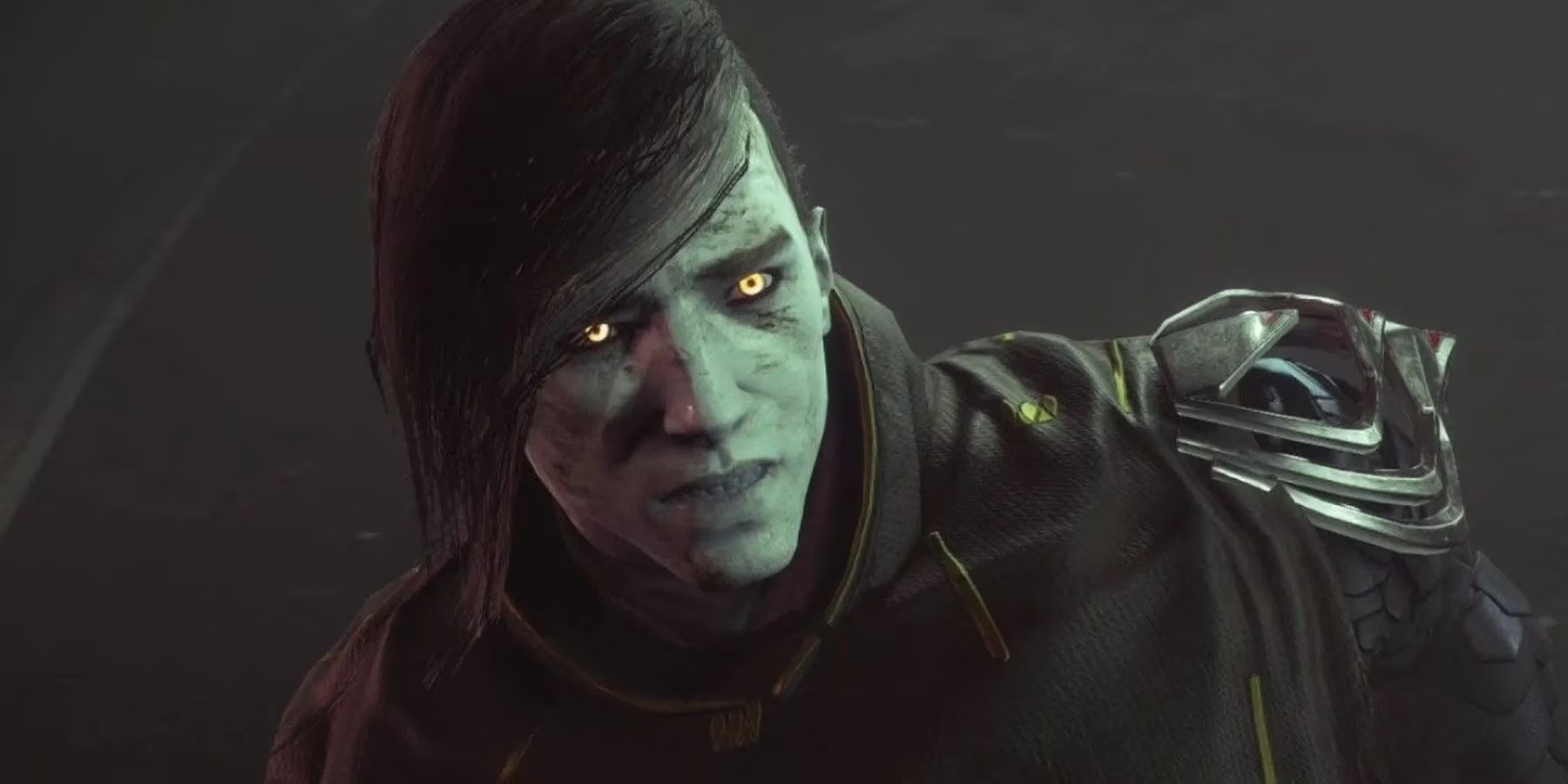
The story of this missing feature is deeply intertwined with the game's own history. For years, a Guardian's visage was set in stone the moment they were created. This was true even for veterans who carried their characters over from the original Destiny in 2014. Imagine: a face chosen in a different gaming era, a snapshot of 2014 or 2017 aesthetics, forever bound to a character wielding god-like powers in 2026. The Universal Armor Ornament system allowed for incredible sartorial freedom, letting players look like anything from a golden-age knight to a neon-clad cyberpunk mercenary. Yet, the face beneath the helmet was an immutable relic. This disparity grew more pronounced as the game evolved, making the 2024 customization update feel less like a new feature and more like the correction of a longstanding oversight.
However, that correction was incomplete. Shortly after the update launched, a player named SnooChocolates3167 took to the DestinyFashion community, a hub for sartorial Guardians, to voice a familiar grievance. They pointed back to a poignant moment from 2020, when another player, KoalaTeaGuy, had made a similar plea. KoalaTeaGuy's argument was visual and powerful. He used a screenshot from Destiny 2: Forsaken, a deeply emotional expansion where the player's Guardian finally removes their helmet to confront the villain Uldren Sov. In that raw, vulnerable scene, KoalaTeaGuy had digitally added a beard to his human character. The edit transformed the moment, adding a layer of weary gravitas and personal history that the vanilla game could not provide. It illustrated that facial hair wasn't just decoration; it was narrative texture, a way to visually communicate a Guardian's age, experience, or personal style.
The response on DestinyFashion was a chorus of agreement and shared frustration. Players lamented the barren landscape of head customization, where beards and other facial hair were conspicuously absent. The conversation, however, wasn't one-sided. A pragmatic counterpoint always emerged: most players, especially in endgame activities, play with the "Helmet Always On" setting enabled for a clear, unobstructed view. From this perspective, intricate facial details seem like a development resource spent on something rarely seen. Yet, this argument misses the deeper point of customization. It's about the knowledge of who your character is, the identity they project in social spaces, and the personal connection fostered during those quiet moments in the Tower or the Helm when the helmet finally comes off. A player's expression shouldn't be limited by practical gameplay settings.
The community's hopes are now cautiously pinned on the future. The Final Shape, the epic conclusion to the Light and Darkness saga, has come and gone, yet the beard frontier remains uncharted. But the precedent set by Into the Light is significant. Bungie demonstrated that altering core character identity is possible within their engine. They allowed players to change not just their face, but their very name—a monumental shift. This opens the door, however slightly, to the possibility of more granular customization options down the line. The player base has made its desires clear through years of consistent feedback:
-
Longevity of Request: The demand has been documented for nearly ten years, showing it's a deep-seated community want, not a passing fad.
-
Narrative Potential: As shown with the Forsaken edit, facial hair can add profound emotional and storytelling weight to key cinematic moments.
-
Completion of Expression: With armor, shaders, and now faces being customizable, beards feel like the last major piece of the visual identity puzzle.
In 2026, Destiny 2 stands as a titan of the live-service genre, having shaped the industry for years. Its worlds are vast, its stories epic, and its fashion game is arguably unmatched. Yet, in this universe of infinite possibility, a simple human (or Awoken, or Exo) desire—to grow a beard—remains tantalizingly out of reach. The community waits, ever hopeful, that in a future season or update, Bungie will finally grant this long-held wish, allowing Guardians to not just save the universe, but to do so with a bit more personal flair and character etched upon their faces. The journey for beards continues, a quiet but persistent legend alongside those of great raids and legendary weapons.
Discussion