10 Most RNG-Heavy Games That Dominated 2026’s Patience Test
Few game design choices stir as much love and loathing as the random number generator. When every shot, every loot drop, and even the structure of the world itself hinges on unseen digital dice, the thrill of victory becomes inseparable from the agony of defeat. For players who crave unpredictability, RNG-heavy titles offer an experience that mirrors life’s own chaotic surprises. But what happens when the algorithm decides to be cruel? How many runs must a vault hunter endure before the perfect gun finally appears? Even in 2026, with ever more sophisticated procedural systems, the following games remain the ultimate tests of patience and statistical faith.
Destiny 2
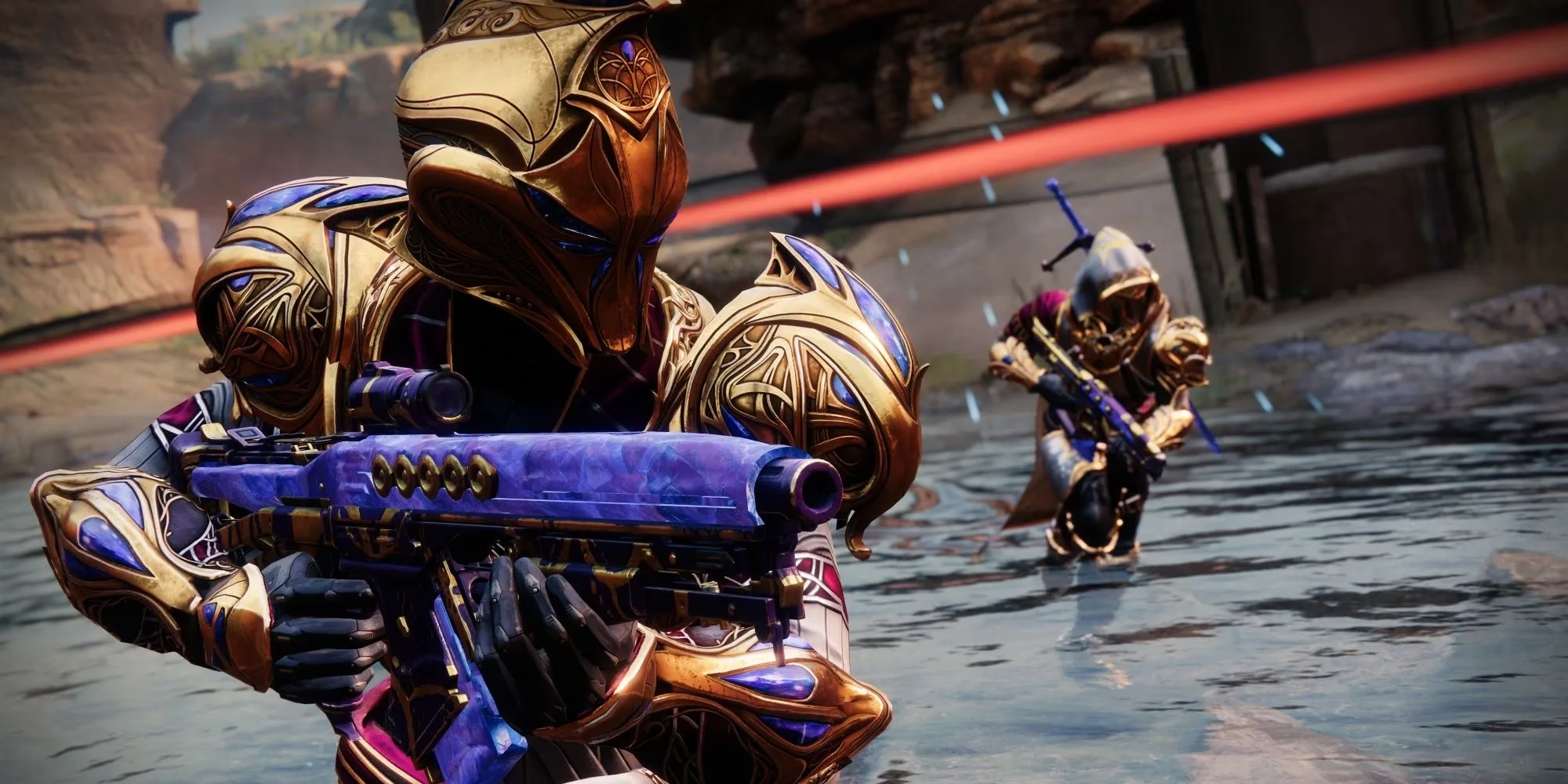
Bungie’s first-person shooter continues to mesmerize with its breathtaking cosmic vistas and fluid gunplay, yet the road to a god roll is paved with comical frustration. As a Guardian defending humanity’s last safe city, every raid completion and Nightfall strike leaves you at the mercy of an inventory system that can deny a desired exotic even after the hundredth attempt. Why does the One Thousand Voices or Gjallarhorn drop for some on their first clear while others grind for months? The answer lies in pure RNG, and in 2026, with new expansions continuously adding coveted gear, the ritual of praying to the loot gods remains as intense as ever. The dance between Light and Darkness has never felt so personal.
Cataclysm: Dark Days Ahead
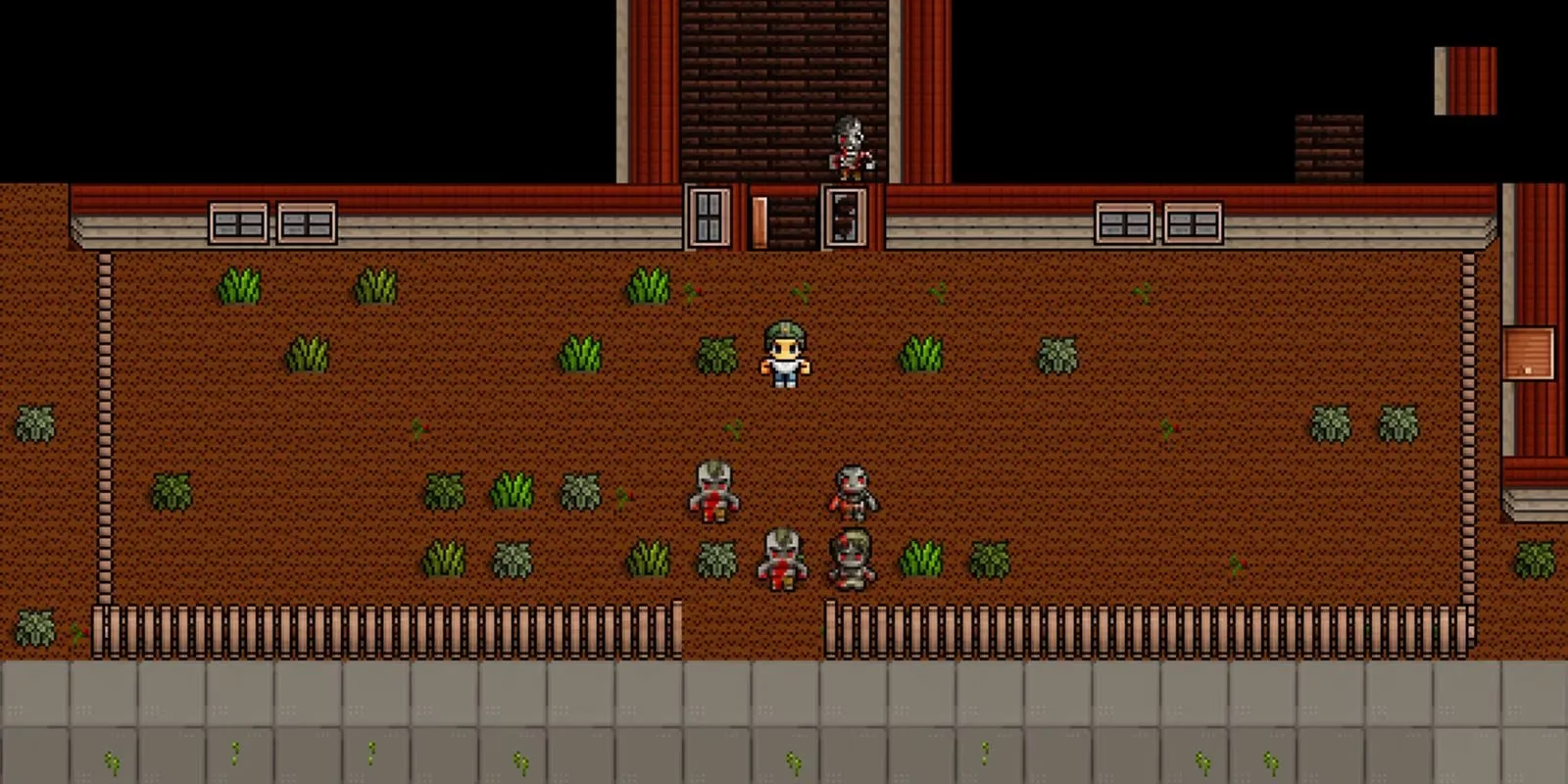
What happens when every decision could be your last, and the world itself feels actively hostile? Cataclysm: Dark Days Ahead drops the player into a desolate, zombie-infested landscape with limited resources and zero hand-holding. Every step forward might trigger an ambush from lurking horrors; every scavenged meal could be tainted. The RNG here doesn’t just govern item drops—it dictates event encounters, infection rates, and the very makeup of the ruins you dare to explore. Surviving a single week requires not only skill but also a frightening amount of luck, and even hardened veterans find themselves at the mercy of a cruel algorithm that can turn a promising run into a bleak statistic.
The Binding of Isaac
Edmund McMillen’s grotesque roguelike traps players in a procedurally generated basement where tears are weapons and familiars are blessings. Yet even the most battle-hardened Isaac veteran knows the sting of an uncooperative seed. The rooms themselves are randomized, but it is the item pool that truly tests one’s devotion. Ever heard of the Super Bandage? Some players complete dozens of full-clears without ever seeing it, while others stumble upon Brimstone and Mom’s Knife on the first floor. The entire run can pivot on a single pedestal, turning a doomed child into an unstoppable force or leaving him weeping in a corner. The RNG here is both the draw and the dread.
World of Tanks
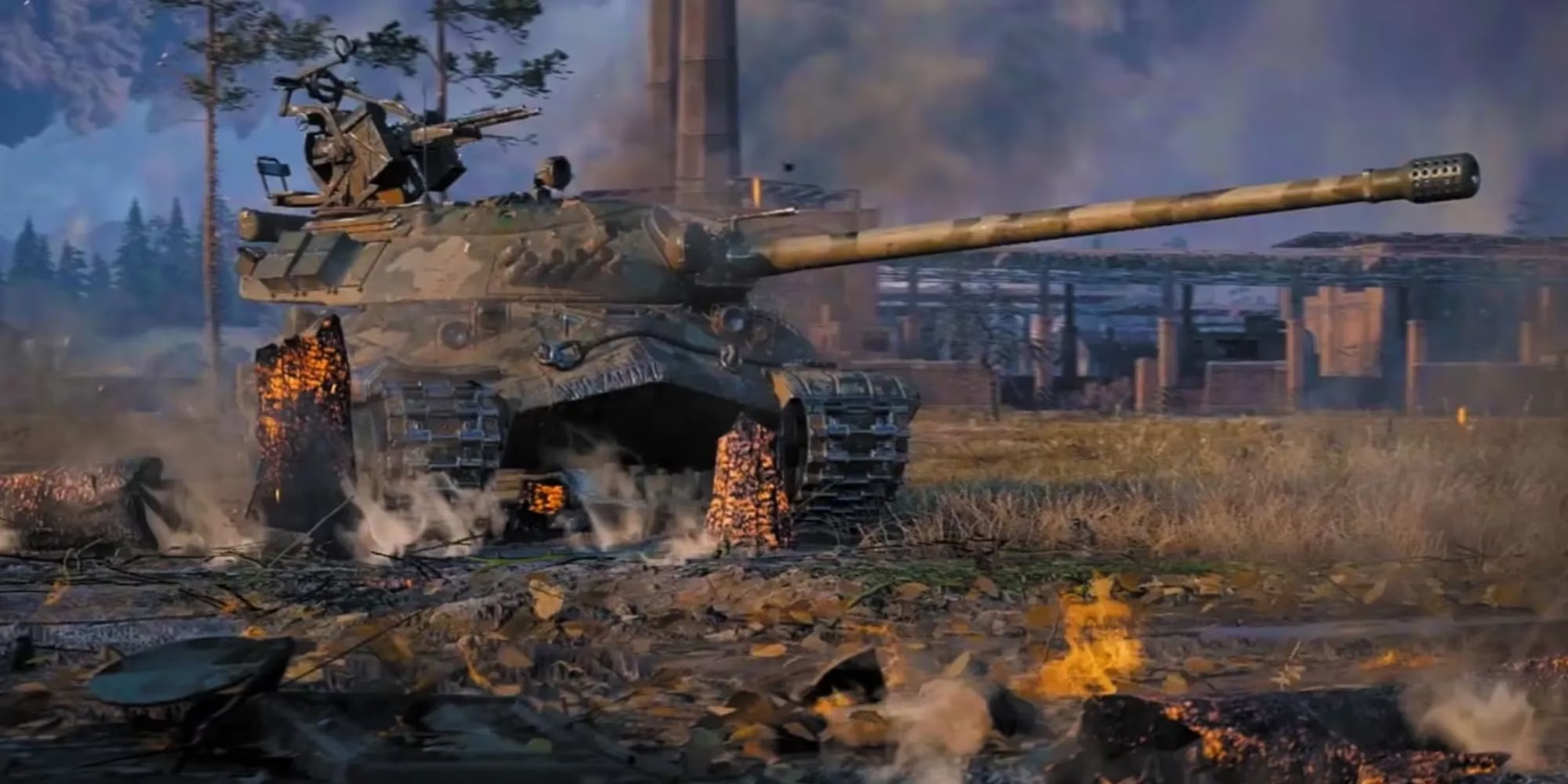
Armored warfare should reward tactical precision, but in Wargaming’s free-to-play behemoth, the hand of RNG often makes a mockery of careful aiming. Why does a perfectly aligned shot sometimes derp into the dirt while a wild snapshot from a moving tank lands a critical hit? The game’s penetration and dispersion mechanics hide a notorious randomness that has spawned countless meme compilations. To make matters trickier, the grind for new vehicles and equipment is itself a lottery, with free-to-play paths feeling like a gamble against the premium tier’s convenience. Even in 2026, the sight of an shell inexplicably bouncing off a lightly armored scout remains a shared trauma.
FTL: Faster Than Light
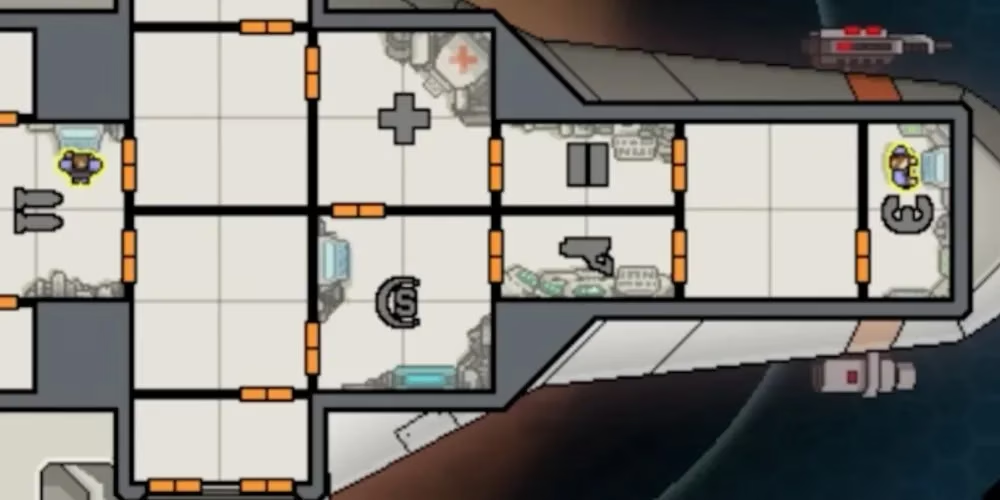
Stranded in a hostile galaxy with a vital message to deliver, you become the ultimate dice-rolling admiral. FTL’s charm stems from turning every jump into a narrative gamble: do you assist the giant alien spiders? Attempt to salvage a derelict ship? Each choice triggers an event whose outcome is decided by RNG, and a run can implode because a single vital system took a stray missile at the worst possible moment. The rogue-like structure means all that carefully hoarded scrap and weaponry evaporates with a bad dice roll—no save scumming permitted. Isn’t it astonishing how a game with such simple pixel art can generate so much character through sheer unpredictable chaos?
Oregon Trail
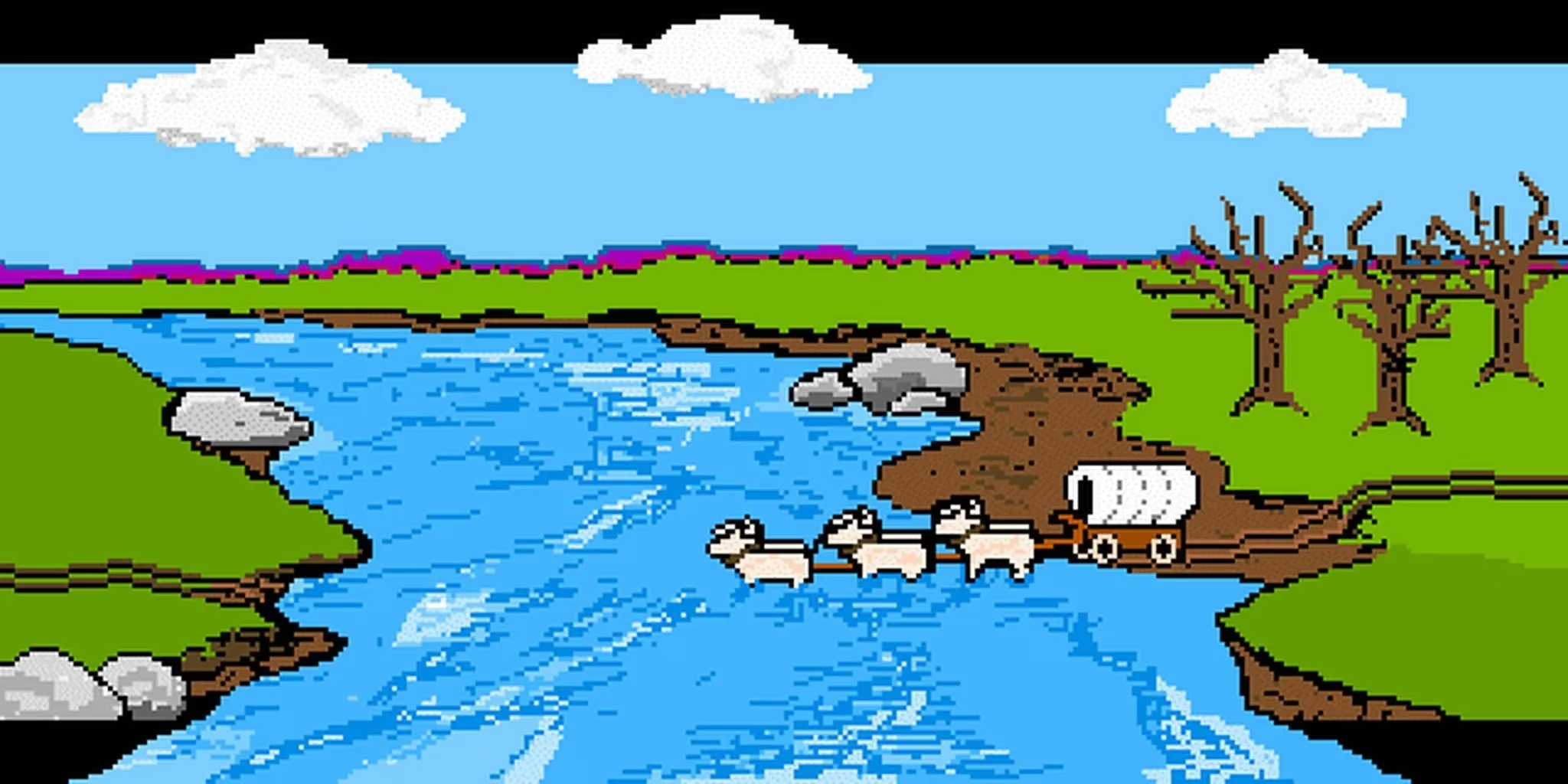
Before modern triple-A titles boasted about procedural generation, a generation of schoolchildren learned the cruelty of chance through dysentery and broken wagon axles. This historical simulation casts the player as a 19th-century pilgrim whose very survival depends on resource management and luck. Deciding whether to ford a river or caulk the wagon becomes a heart-pounding lottery. Even the most well-prepared party can be decimated by a sudden illness, and the game’s snarky epitaphs (“Here lies andy, peperony and chease”) only add to the absurdity. In 2026, the Oregon Trail remains a timeless reminder that life’s randomness needs no polygon count to leave a lasting mark.
Dwarf Fortress
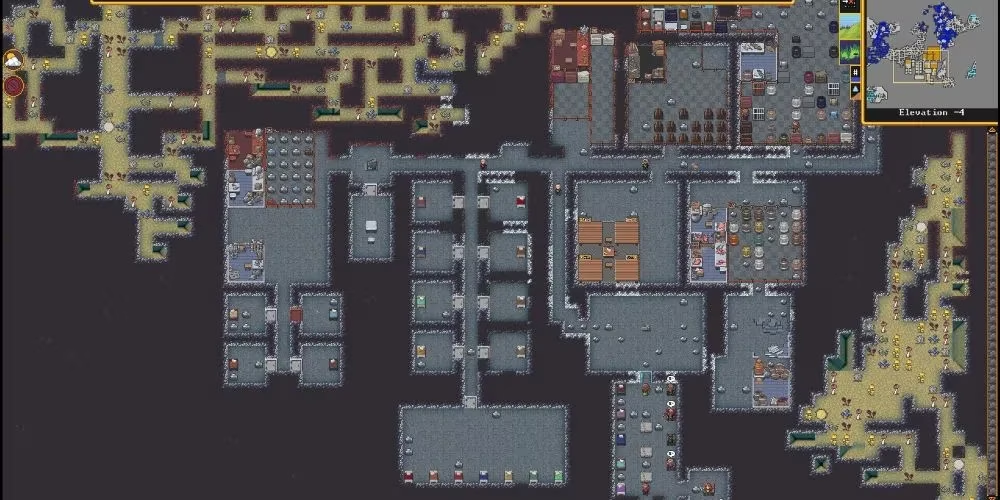
Could any title embody RNG more comprehensively than a game where the entire world, its history, and its flora and fauna are generated on the spot? Dwarf Fortress elevates randomness to an art form. Every dwarf arrives with procedurally generated personality traits and preferences, every forgotten beast is a unique abomination, and every tantrum spiral can be triggered by a randomly misplaced sock. Even when the fortress seems stable, the algorithm might decide to unleash a were-llama infestation or a flood of goblins. The result is an emergent narrative machine where the player fights to impose order on a universe that thrives on chaos. The game’s 2022 Steam release only proved that this text-and-tiles legend remains the undisputed king of procedural unpredictability.
Borderlands 2
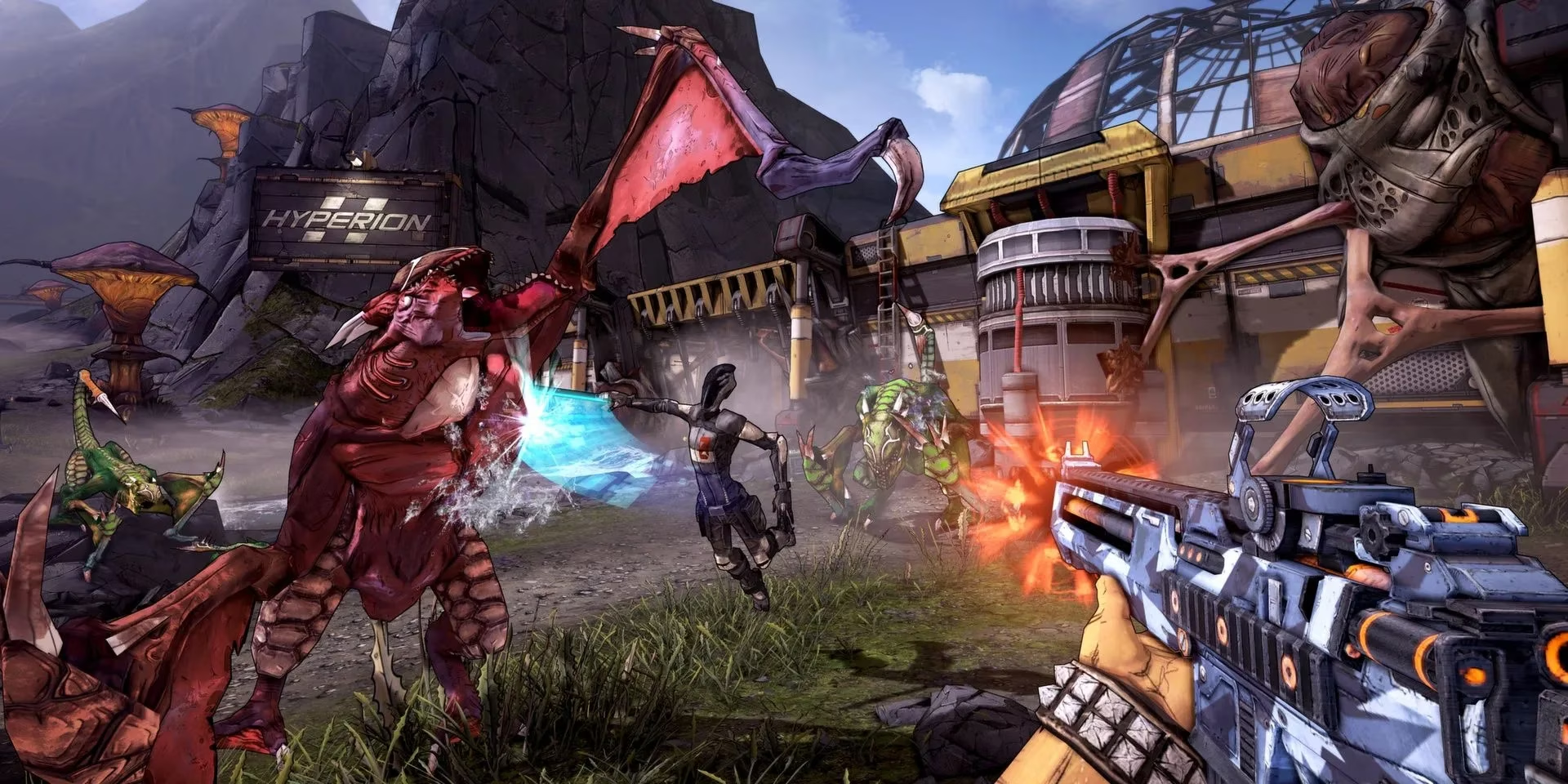
Gearbox’s cel-shaded shooter franchise practically built its identity around the promise of gazillions of guns, yet veteran players know that the vast majority of those firearms are immediate vendor trash. Borderlands 2 is brutal in its RNG, especially when specific legendary weapons like the Unforgiven or the Bitch are tied to a single boss with a miserly drop rate. Why does one Vault Hunter receive an Infinity pistol on the first kill while another farms Doc Mercy for weeks with nothing to show? The imbalance is compounded by the fact that certain builds are nearly unviable without those exact drops, making the grind feel less like a journey and more like a compulsive slot machine pull.
Diablo 2: Resurrected
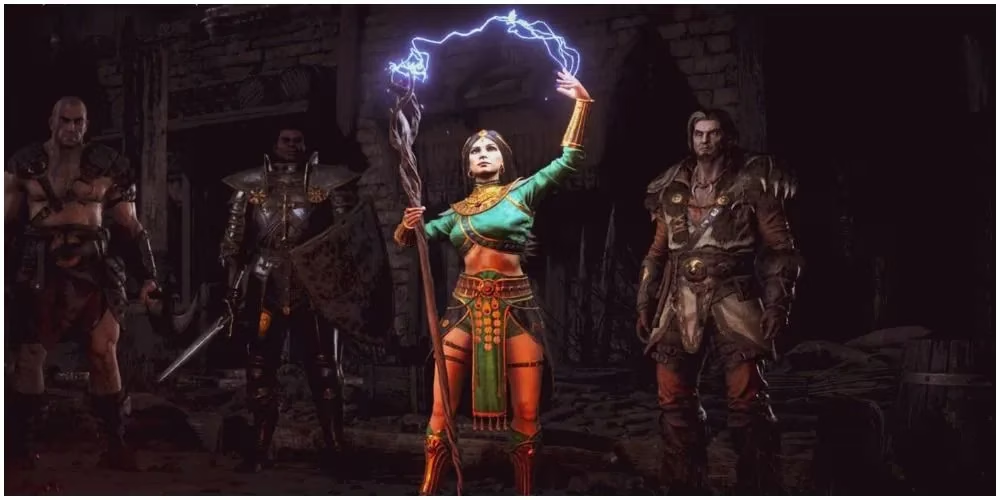
Blizzard’s magnum opus set the template for action RPG loot systems, and its remastered version still holds up as a masterclass in addictively stingy RNG. Slaughtering demons in the depths of the Sanctuary reveals a simple truth: the chance of a Stormshield or an Arachnid Mesh dropping is measured in fractions of a percent. An entire playthrough may yield zero build-defining items, forcing players to repeat boss runs until their eyes glaze over. In 2026, the remastered ladder seasons continue to draw crowds who accept that every unique drop is a tiny miracle. The thrill comes not from predictable progression but from the sheer lottery of seeing that golden text flash across the screen.
Spelunky
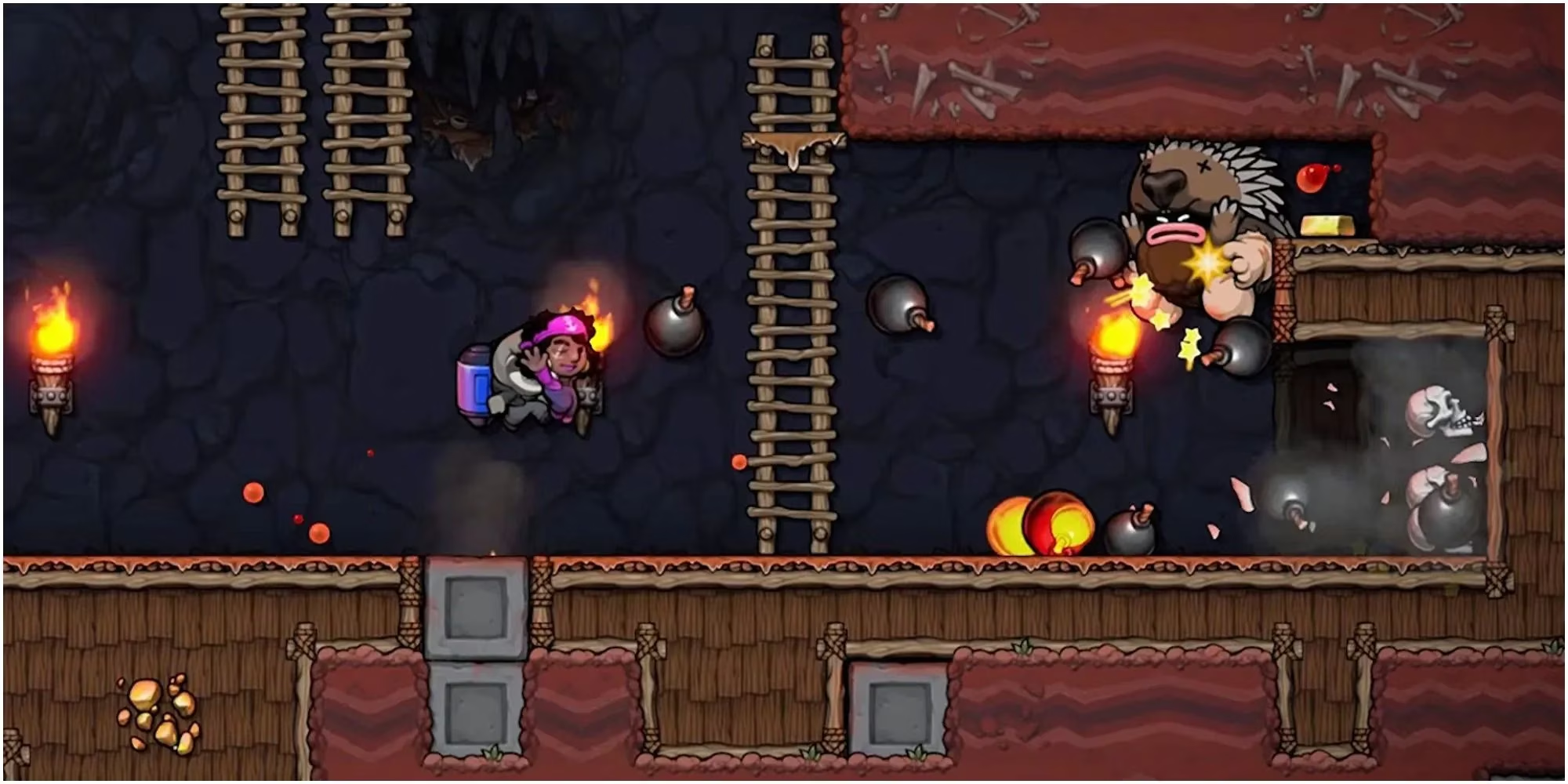
At first glance, Spelunky’s charming cartoon style masks a heartless core. Every stage is a procedurally generated deathtrap where one misplaced bomb can end a run in an instant. Yet the RNG extends far beyond level layouts: the items that appear after clearing a challenging section can be laughably useless—a parachute when you’re already falling, a climbing glove in an open cavern. The shopkeeper’s inventory might hold a jetpack that transforms the game, or five identical piles of rope. The only certainty is that the game owes you nothing. This capriciousness transforms each attempt into a story, often concluding with a spectacular, randomness-induced demise that players eagerly recount. After all, isn’t the most memorable victory the one that felt truly improbable?
Discussion